
Buying a 5-axis part is not the same as buying a 3-axis part. The savings and the risks live in different places. This guide helps you specify, cost, and source 5-axis components so you pay for capability you actually use.
What Makes a Part a "5-Axis Part"
A part earns 5-axis when its features sit on multiple faces with relationships you cannot hold by unclamping and re-fixturing on a 3-axis machine. Think impellers, manifold blocks with cross-drilled passages, mold cores with deep undercut walls, or any component where opposite-face holes must stay aligned within tight bands. If your part is essentially flat with features on one or two faces, it is a 3-axis part wearing a 5-axis price tag.
Process and Equipment Options
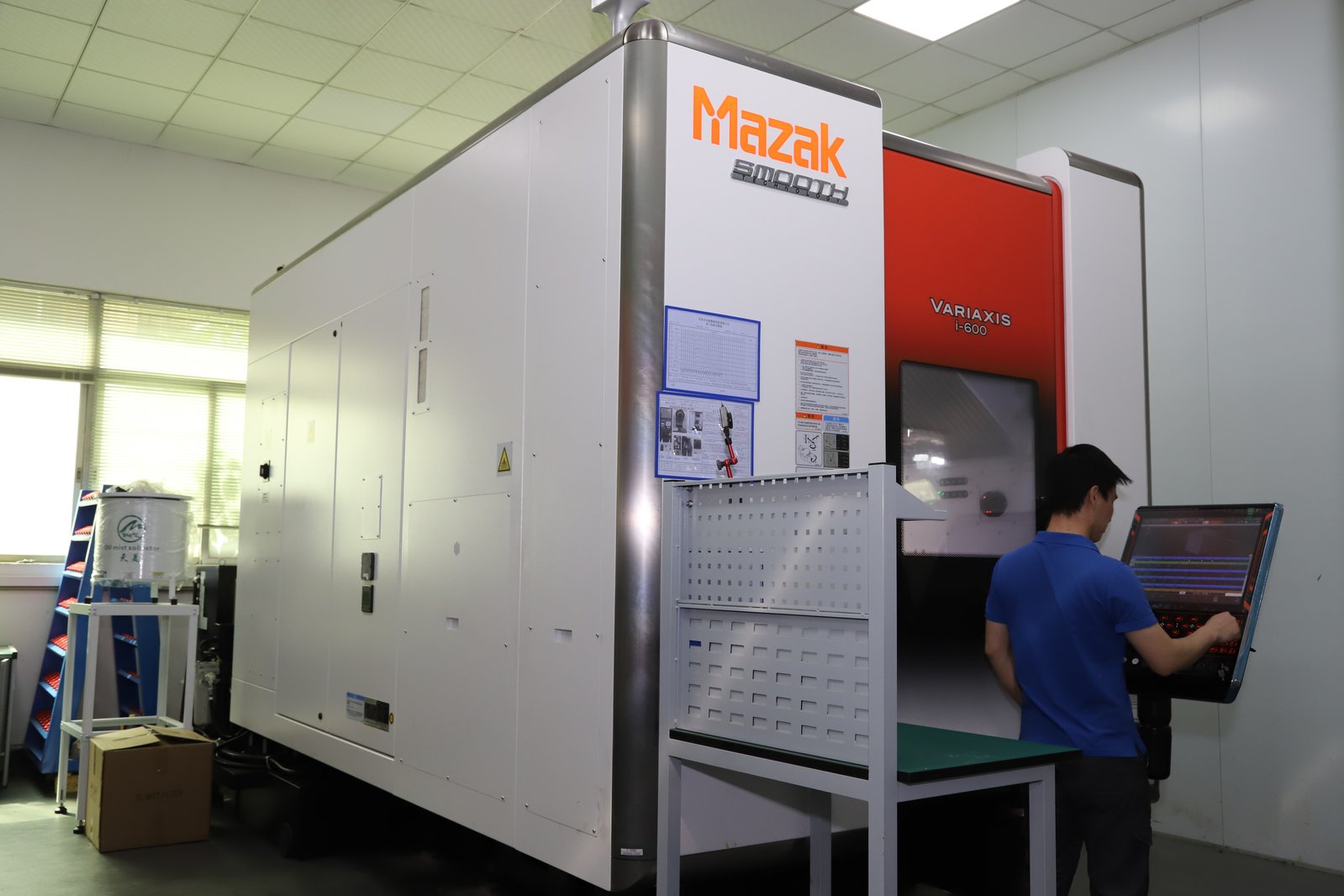
Two architectures matter to you as a buyer. Trunnion machines (part tilts on a rotary table) are rigid and excel on smaller, dense parts. Swivel-rotate machines (head tilts) handle longer parts. The right one depends on your geometry; a shop with only one type will push your work toward it. Also ask about in-process probing, that is what lets the shop verify features mid-cut instead of discovering drift at final inspection.
Quality Control and Inspection
For 5-axis parts the inspection focus is relationship tolerances: position and concentricity across faces, not just absolute dimensions. Require:
- First Article Inspection against your drawing before the batch.
- CMM reporting on the cross-face relationships you flagged.
- Cpk on key characteristics ≥1.67, general ≥1.33 (Zhuohang standard) for production.
- Material certification and, where relevant, NDT on critical features.
Cost and Lead-Time Drivers
5-axis cost is driven by machine-hour rate, programming complexity, and setup reduction. The lead-time win comes from collapsing several setups into one. Two buyer moves protect you: send a clean GD&T drawing with datums, and consolidate any finishing (anodize, heat treat) with the same supplier so there is one accountable owner for final fit. Splitting finishing across vendors invites finger-pointing you pay for.
A Practical RFQ Checklist
- Model + drawing with datums and relationship tolerances called out.
- Material grade and certification.
- Surface finish per feature, not one number for the whole part.
- Volume, repeat cadence, required ship date.
Use our RFQ checklist to assemble this before you ask for quotes.
Talk to Our Engineering Team
Not sure whether your part needs 5-axis? Send the drawing to [email protected]. We will tell you whether 5-axis earns its premium on your specific geometry or whether a well-run 3-axis process delivers the same part for less.
Frequently Asked Questions
When does a part actually need 5-axis?
When features on multiple faces must hold tight relationships (position, concentricity) that re-fixturing on 3-axis would degrade, or when deep undercut walls need angled tool access. Flat single-face parts do not need it.
What tolerance can 5-axis parts hold?
Standard mill/turn tolerance is ±0.003 mm, with ±0.002 mm on ground or wire-EDM-finished features. The binding limit is usually material and wall thickness, not the machine's axis count.
Why consolidate finishing with the machine shop?
Because the final fit depends on both machining and finishing. One supplier owning the whole chain gives you one accountable party and fewer handoffs, which shortens lead time and removes blame-shifting.
Send your drawing to [email protected] or start with our RFQ checklist. Get a 5-axis-vs-3-axis recommendation with a transparent, itemized quote.