
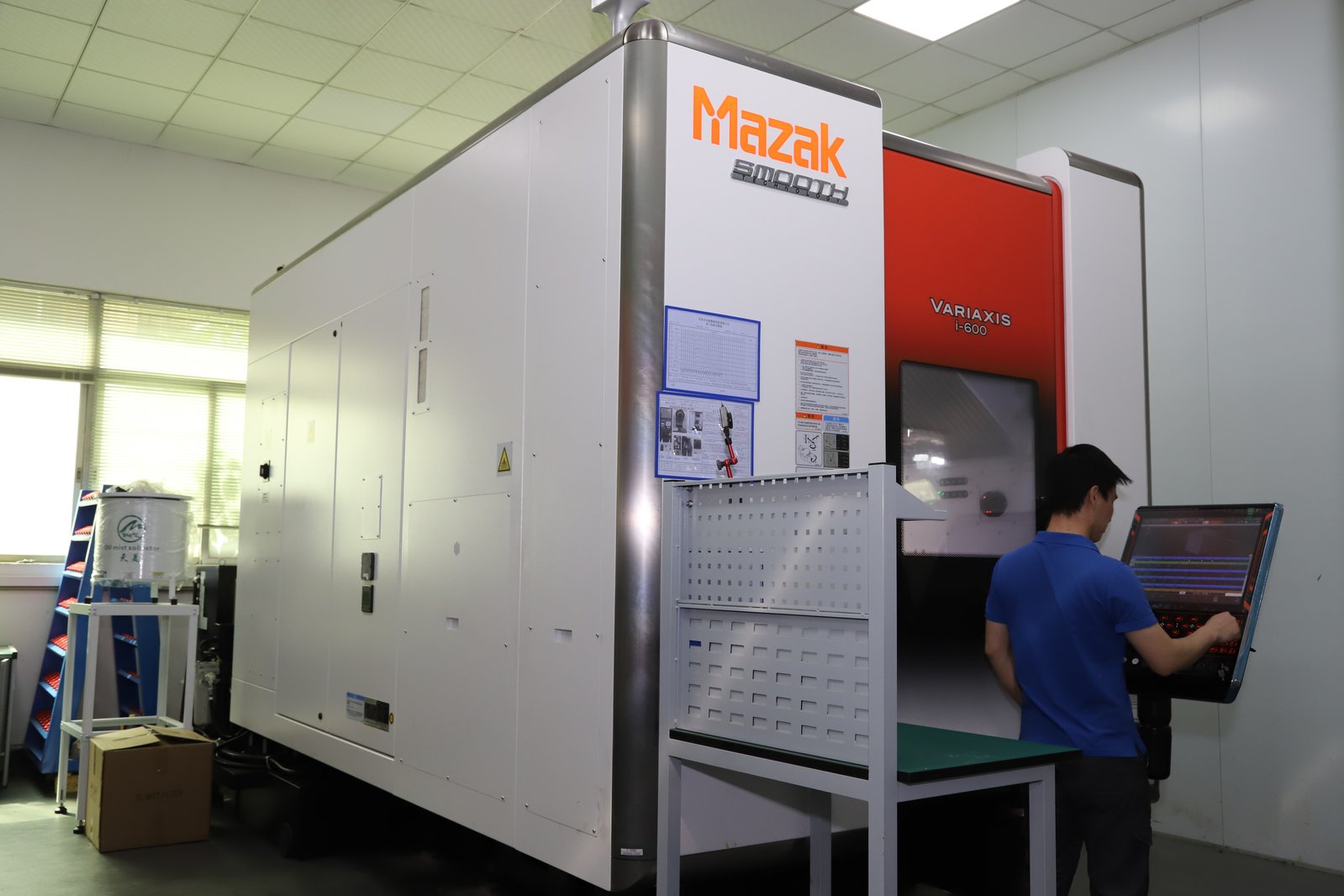
Every shop with a 5-axis machine now calls itself a "5-axis machine shop." That label tells you almost nothing. This guide is about what to verify before you send a drawing, so you qualify the supplier, not just the machine.
What a Real 5-Axis Shop Is
A genuine 5-axis shop treats the extra axes as a process discipline, not a brochure line. It has programmers who understand tool-axis control, probing for in-process verification, and a quality system that documents what the machine actually held. A shop that bought one 5-axis machine last year and a 3-axis fleet the year before is not the same as a shop built around multi-axis work. Ask how much of their revenue is genuinely 5-axis, not how many machines sit on the floor.
How 5-Axis Shops Differ (and Why It Matters to You)
- Trunnion vs swivel-rotate: each suits different part shapes. A shop owning only one will steer work toward it. Know which you are quoted on.
- Programming capability: the machine is only as good as the post-processor and programmer. Ask for a sample first-article report from a similar part.
- Probe and SPC discipline: do they verify mid-batch, or only at the end? Mid-batch catching is what protects your volume.
- Secondary ops: heat treat, anodize, grinding — under one roof or one controlled chain means one accountable owner.
Quality Control You Should Require
Minimum: ISO 9001:2015; IATF 16949:2016 (product design excluded) if you are automotive-adjacent. First Article Inspection before release. A defined Cpk on key characteristics (≥1.67) and general (≥1.33) for production. Material certification traceable to each lot. If a shop cannot show a Cpk report from a comparable job, they are hoping to grow into your program on your risk.
Cost and Lead-Time Drivers
The 5-axis premium is real (often 30–60% over 3-axis machine-hour). It is justified by fewer setups, better accuracy on multi-face parts, and shorter lead time, not by the machine's presence. A shop that cannot explain why your specific part needs 5-axis is either unsure or overselling. The cheapest 5-axis quote is worthless if the part ships late or out of tolerance.
A Practical Qualification Checklist
- Sample FAI + Cpk from a similar part (not just a photo of a finished piece).
- Which 5-axis architecture they run and why it fits your geometry.
- How they catch tool wear mid-batch.
- Secondary operations handled in-house vs subcontracted.
- Capacity headroom — will your volume disrupt their queue?
Our resources hub has a fill-in supplier scorecard.
How Zhuohang Precision Machining Factory Approaches 5-Axis
We run 5-axis as part of a 100+ machine fleet, not as a standalone miracle. We tell you honestly whether your part needs it or whether 3-axis (or turning) is cheaper for the same result, and we document what we hold with Cpk reporting. You are buying a verified process, not a machine count.
Frequently Asked Questions
How do I know a shop is really a 5-axis shop?
Ask what share of their work is genuinely 5-axis and for a first-article report from a similar part. A real shop shows process data; a repackaged job shop shows photos.
Why is a 5-axis quote more expensive?
Higher machine-hour rate plus the cost of skilled programming and probing. It is justified only when your geometry needs fewer setups or multi-face accuracy that 3-axis cannot hold without re-fixturing.
What quality proof should I require before paying?
ISO 9001:2015 (IATF 16949:2016 (product design excluded) for automotive), FAI before release, and a Cpk report: key characteristics ≥1.67, general ≥1.33. Without these you are buying hope.
Qualifying a 5-axis supplier? Send your drawing to [email protected] or use our supplier scorecard. We will show you our process data, not just our machine list.